Studio 609
Voices of the Shore: A Comprehensive Analysis and Storytelling of North End Bath, Maine through Rewilding the Former Stinson Cannery
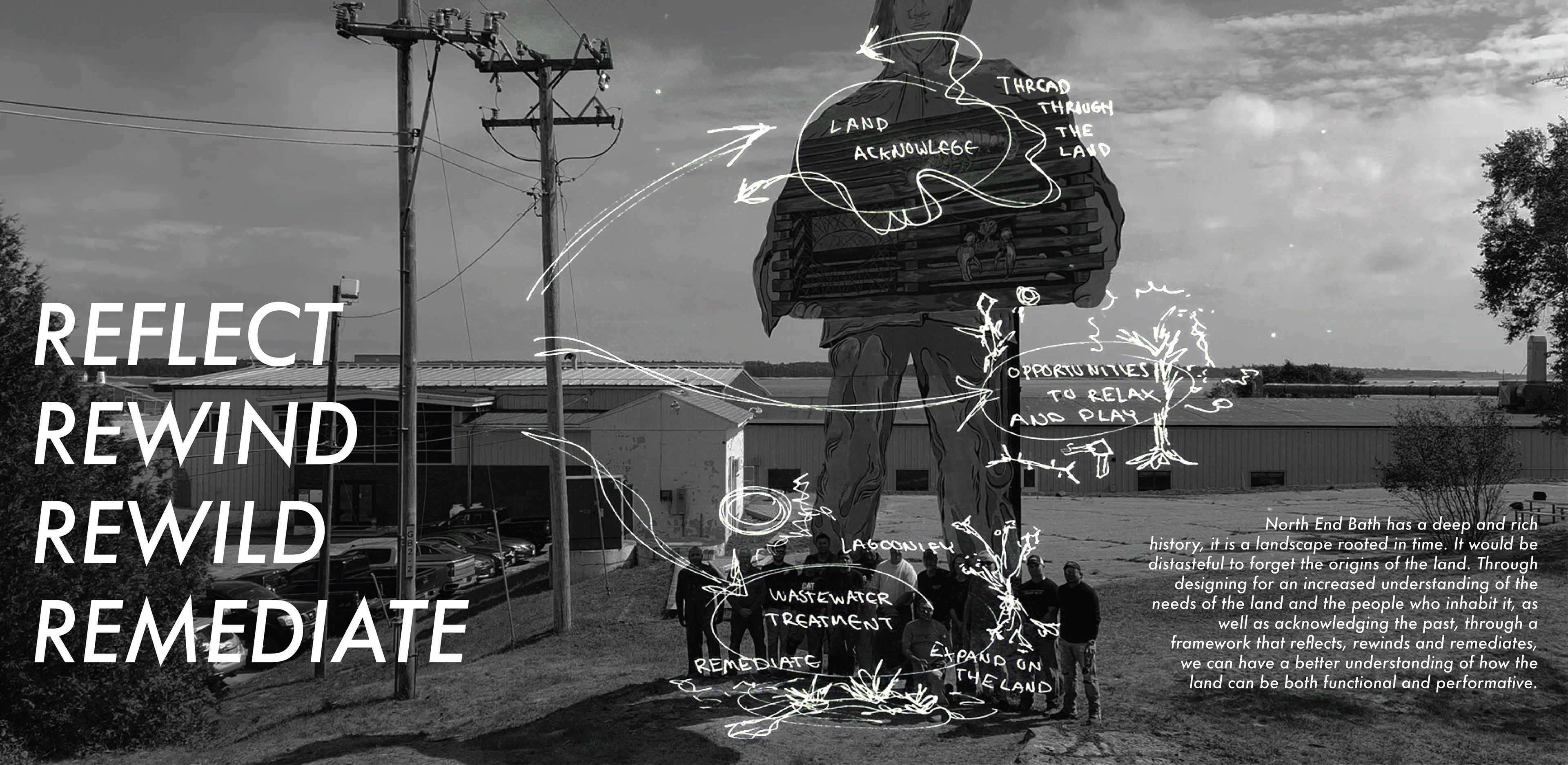
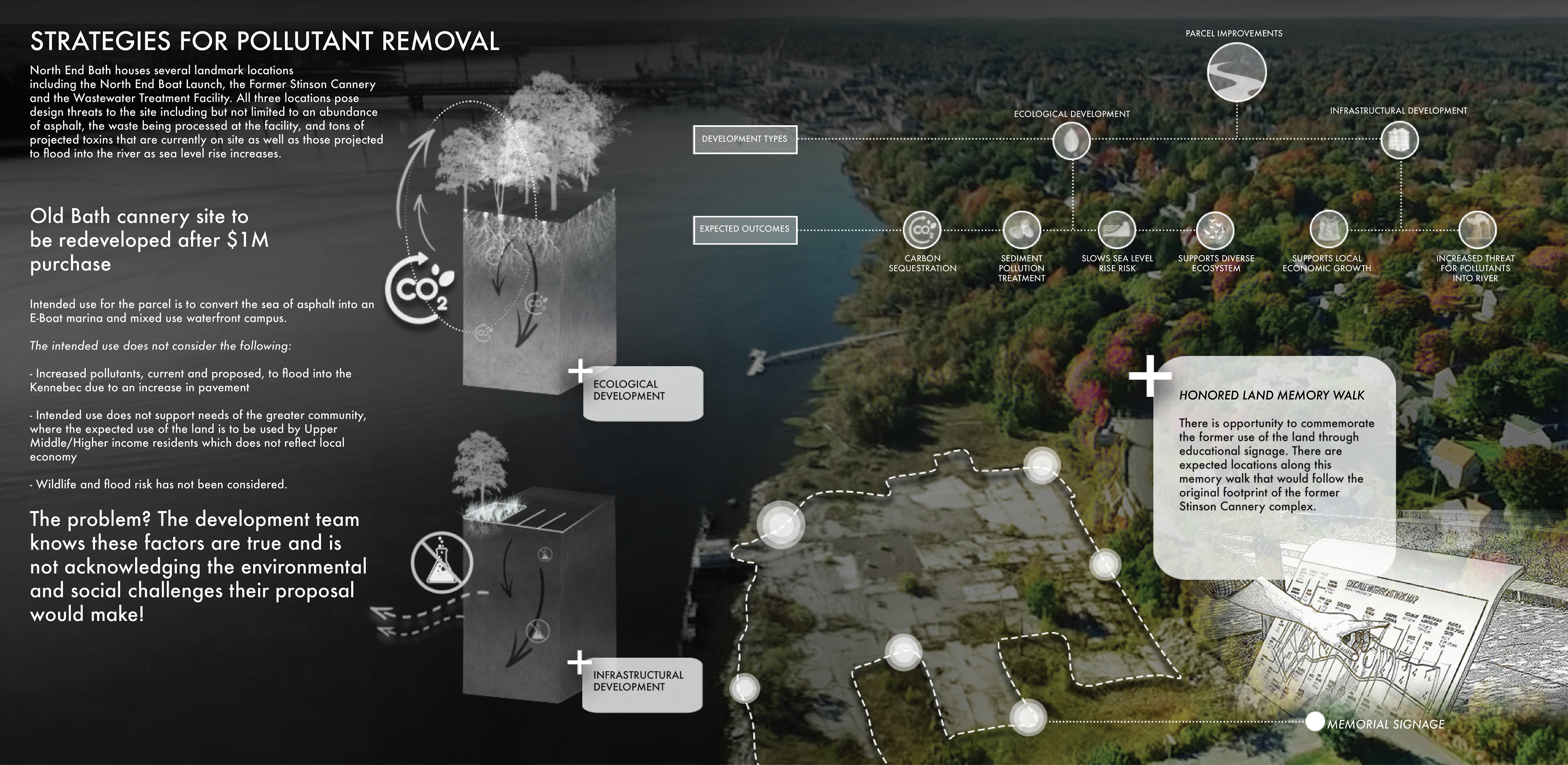
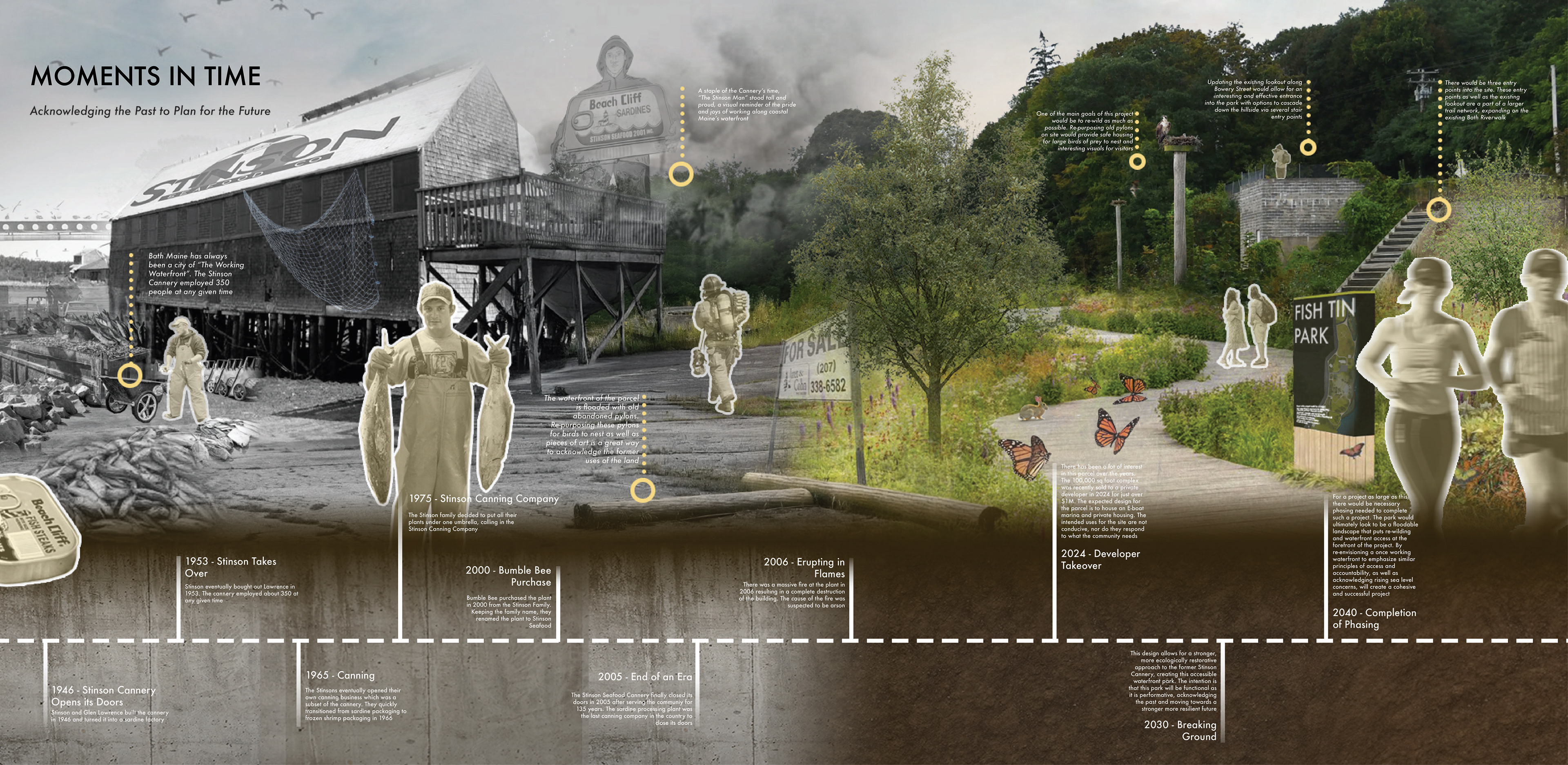
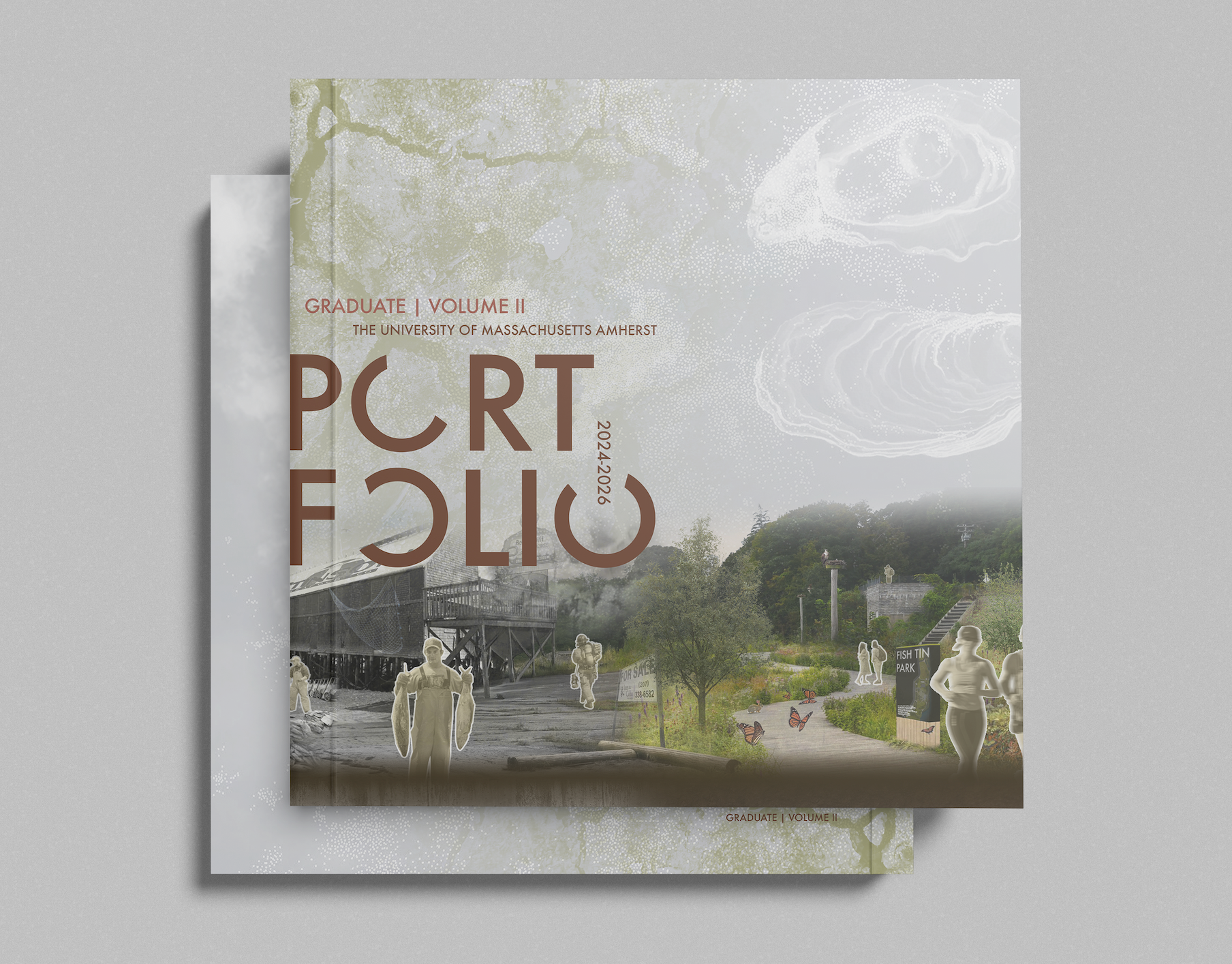
Acknowledging ways to reflect, rewind, rewild and remediate, this project had potential to become a performative and functional landscape that could be phased in ways that were beneficial to the environment and the community. This project aimed to tackle three different stories through in depth analysis and design. These stories included the former industrial and commercial use of the land, those who inhabited and worked on this land, and the wildlife and planting types that ultimately seem to be returning to the land.
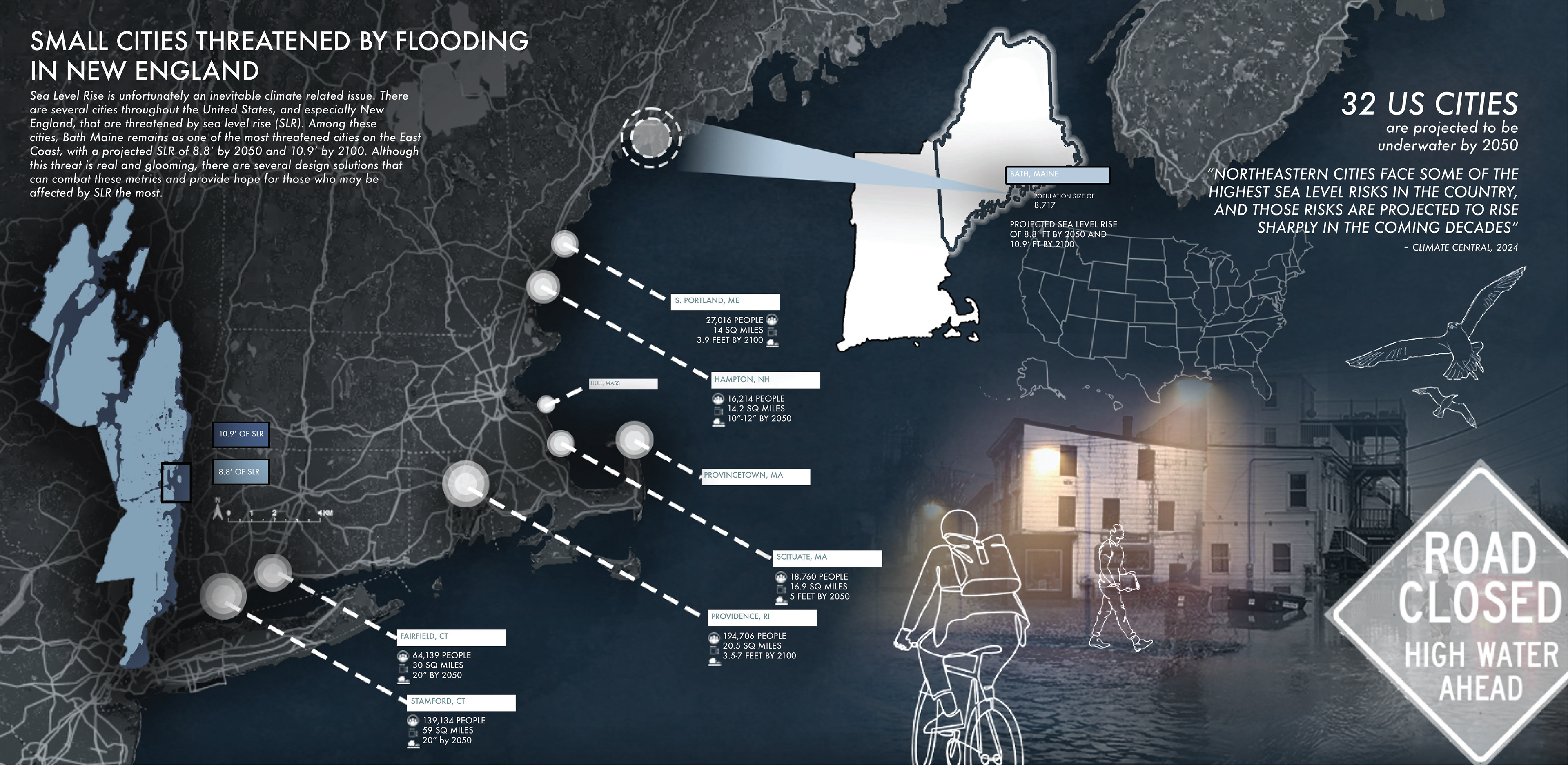
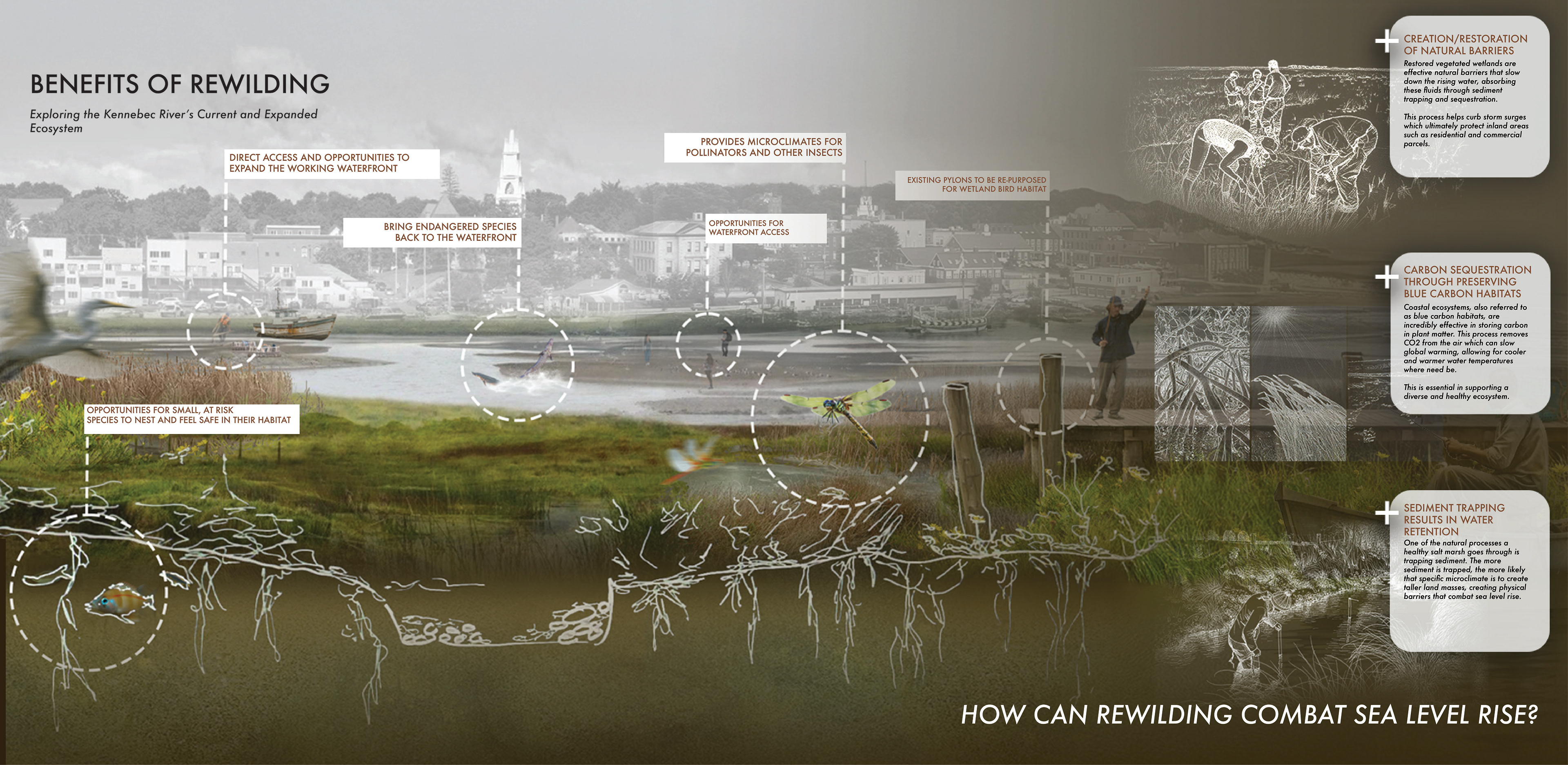
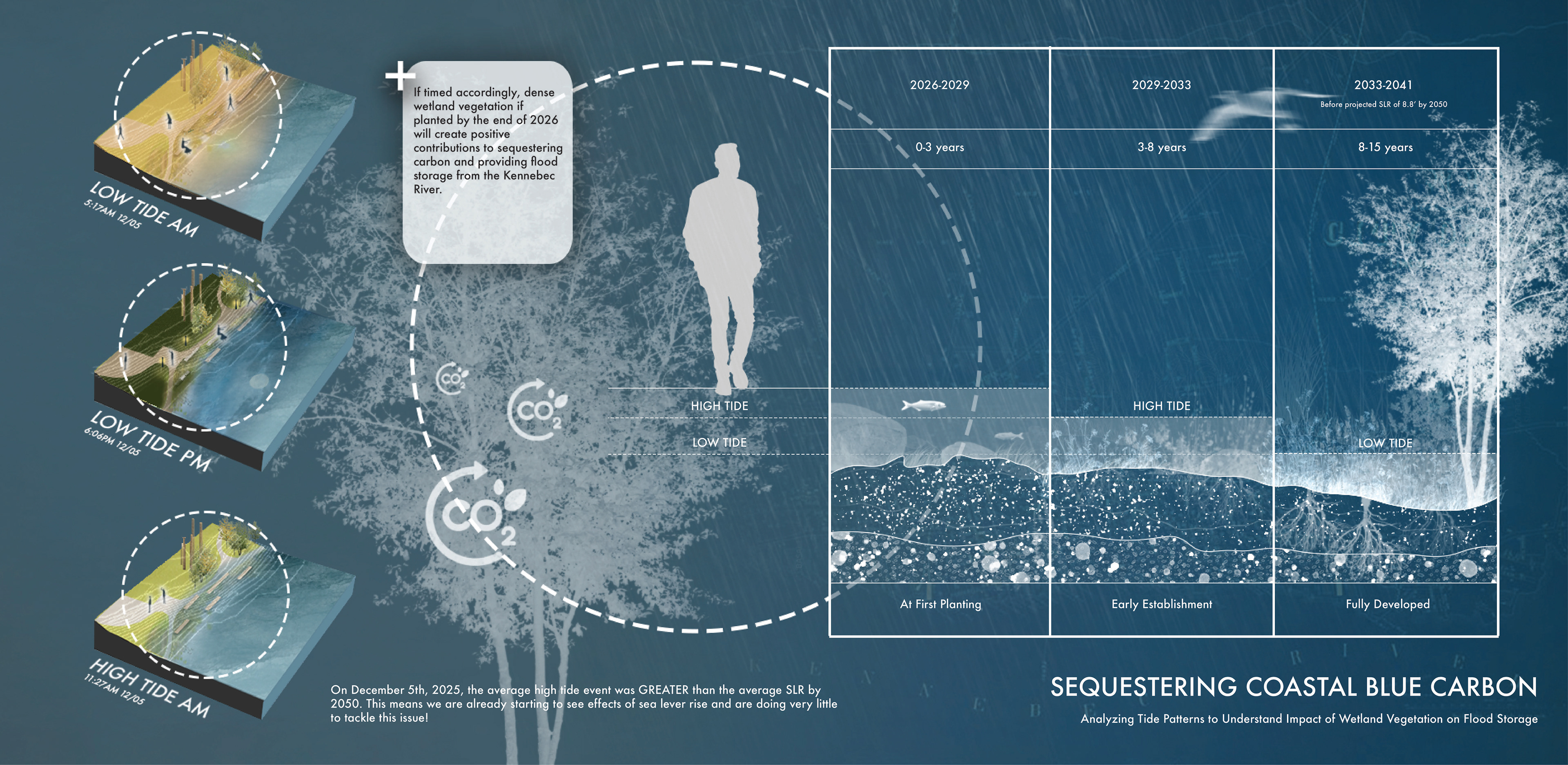
Really started off this project by recognizing that among many small coastal towns in New England, Bath is among the smallest in population and square footage, yet is one of is not the most threatened by sea lever rise. Preparing for the worst case scenario, this small city needs to prepare for 8.8’ of SLR by 2050 and 10.9’ by 2100.
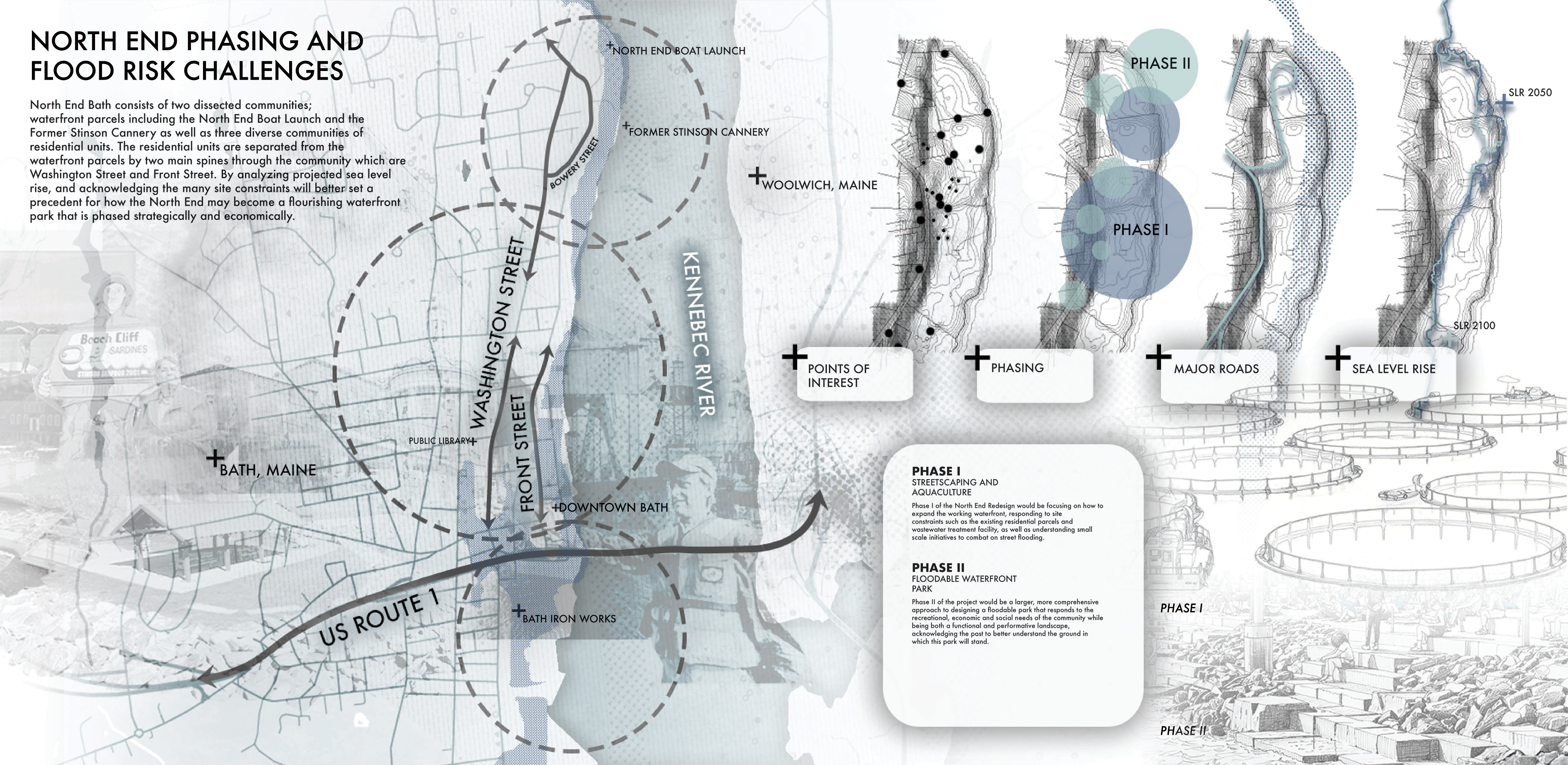
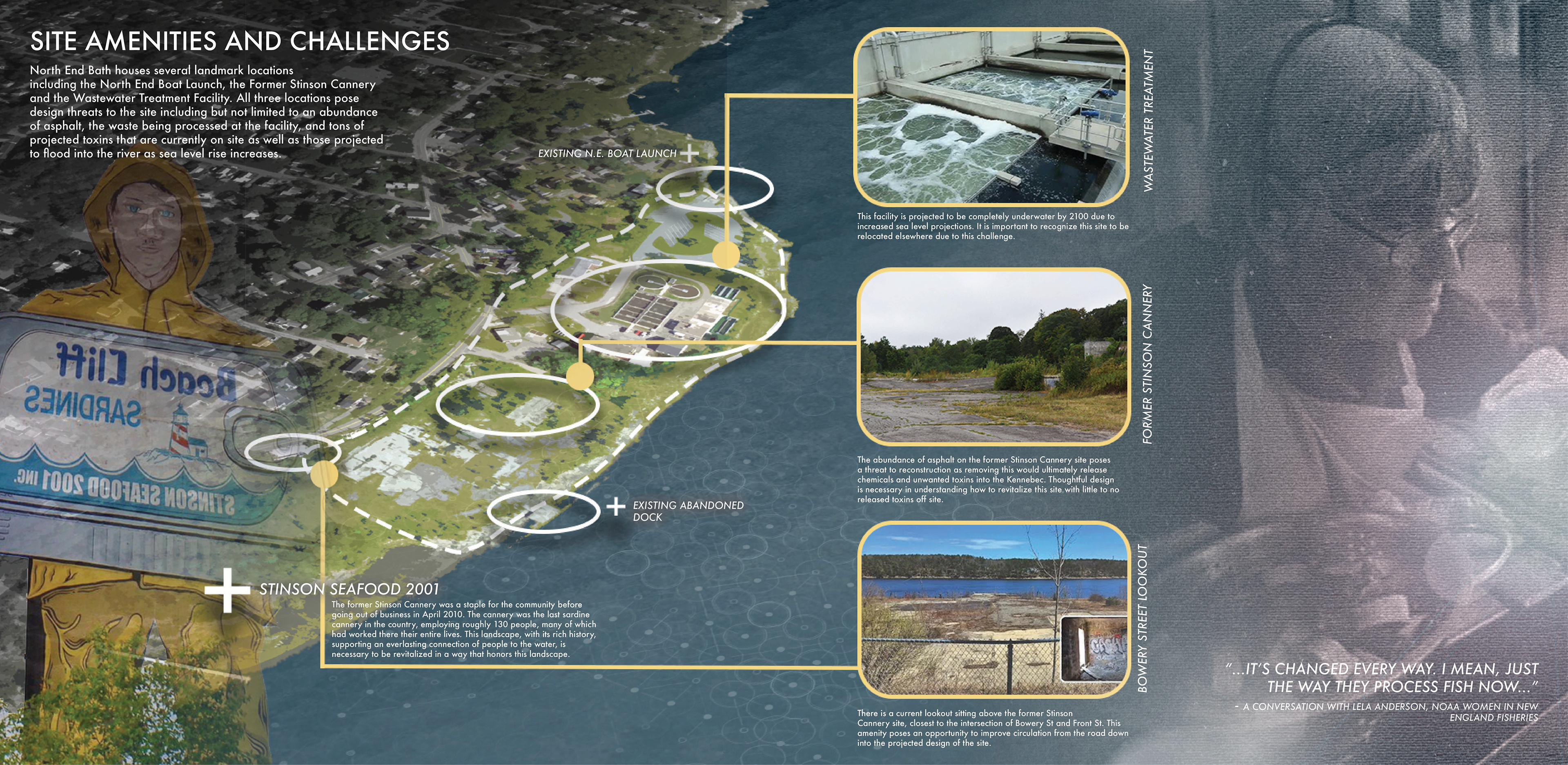
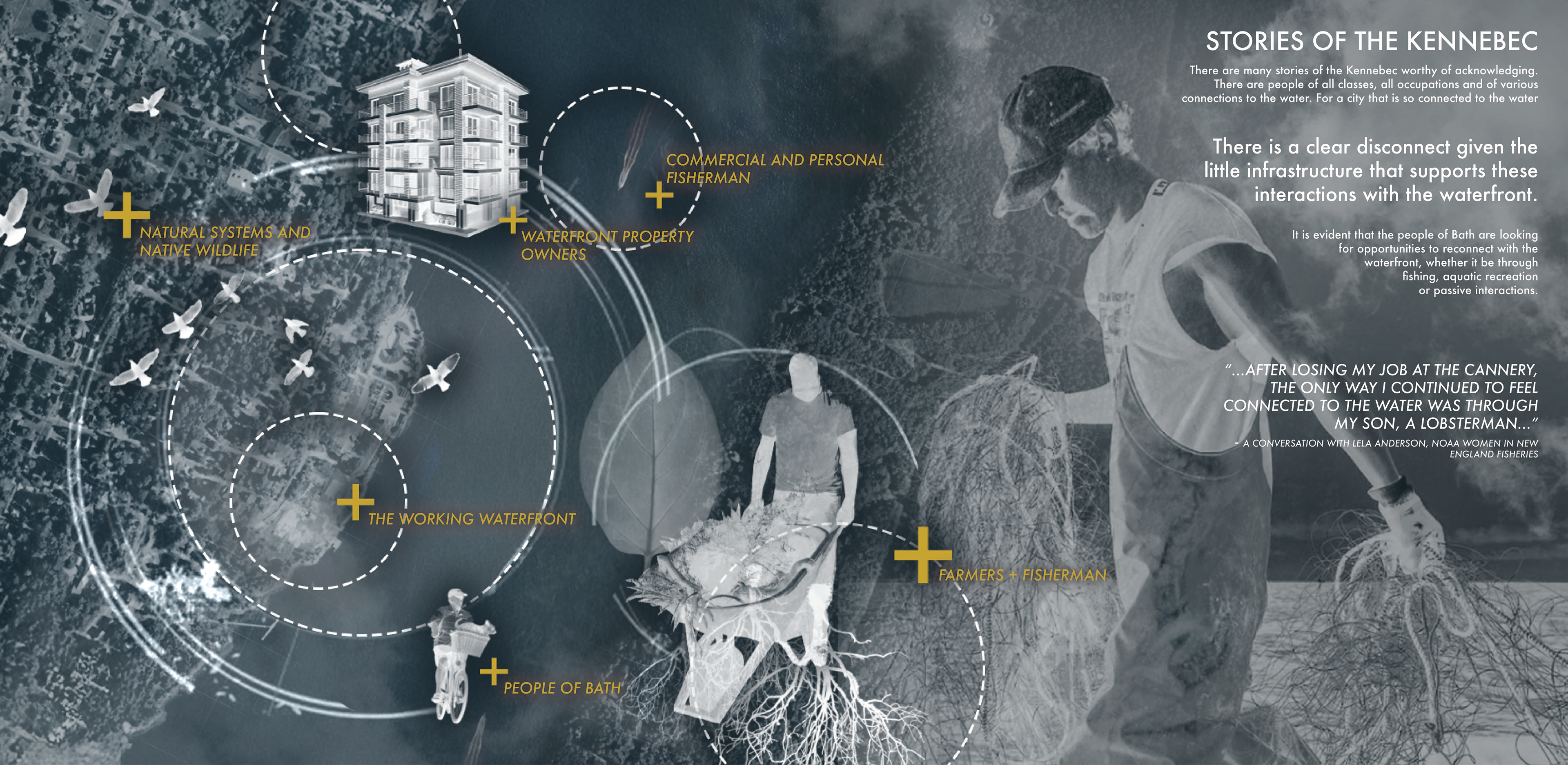
In short, we don’t have a lot of time. It’s incredibly important to understand and recognize what we can do now as a nation and as designers partaking in this challenge of what options Bath has. This is where phasing becomes incredibly important. Phasing can only be achieved if we have a full understanding of the former use of the land, its history and the events that shaped this location, and then what some of the site amenities and challenges of the land are and could be. For example, North End Bath is a land rooted in former and current industrial use. Finding exciting and tasteful ways to honor this story and those who worked on this land, is crucial to this project. Lela Anderson who you see to the right, was a former sardine packer at the cannery. She stated in an interview with the NOAA that after losing her job, the only way she felt connected to the land was through her son, a lobsterman. It's incredibly important to recognize her story and use it as a case study for understanding why it is so important to return people, animals and plant life back to the land, and ultimately back to the water.
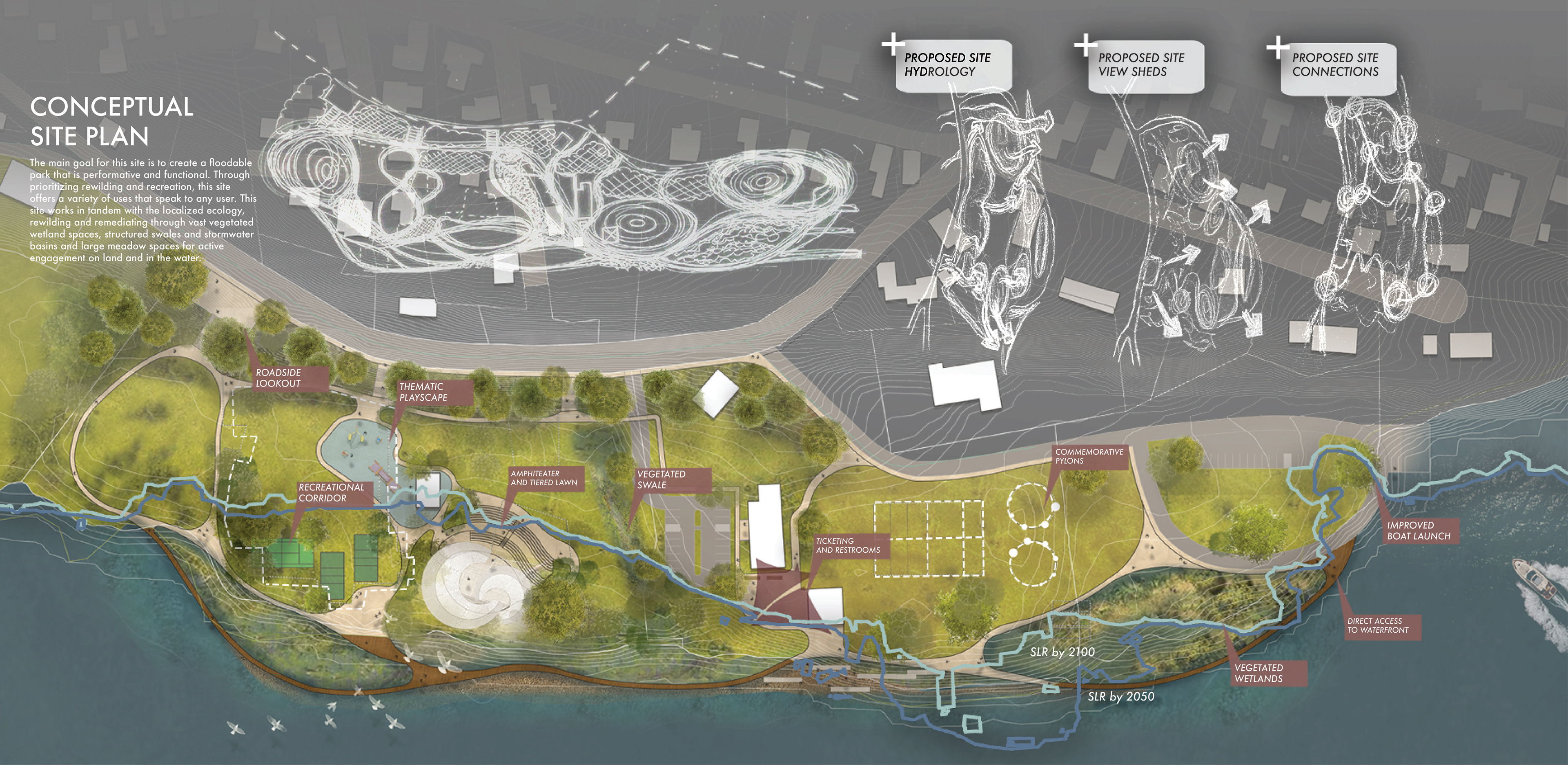
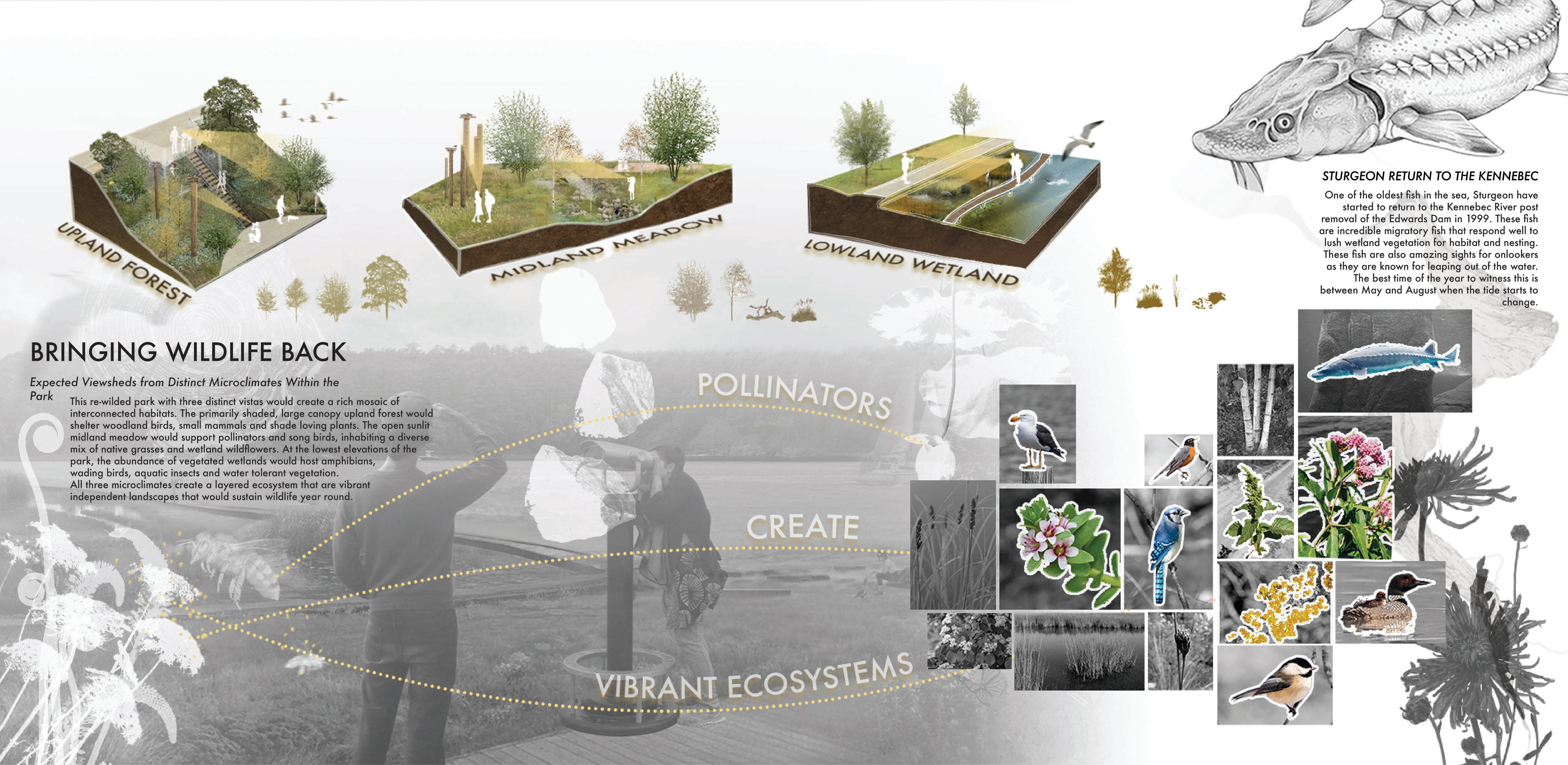
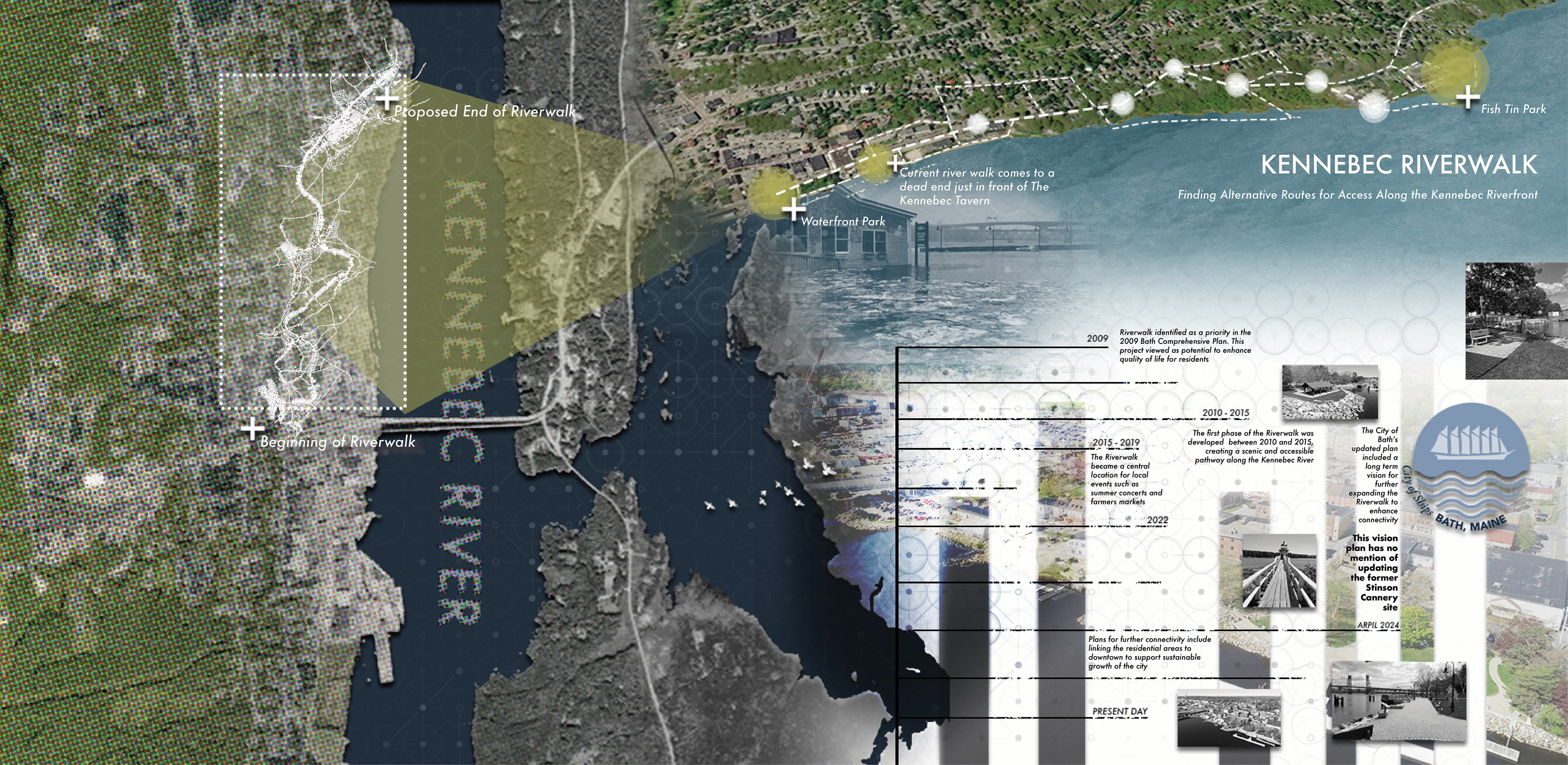
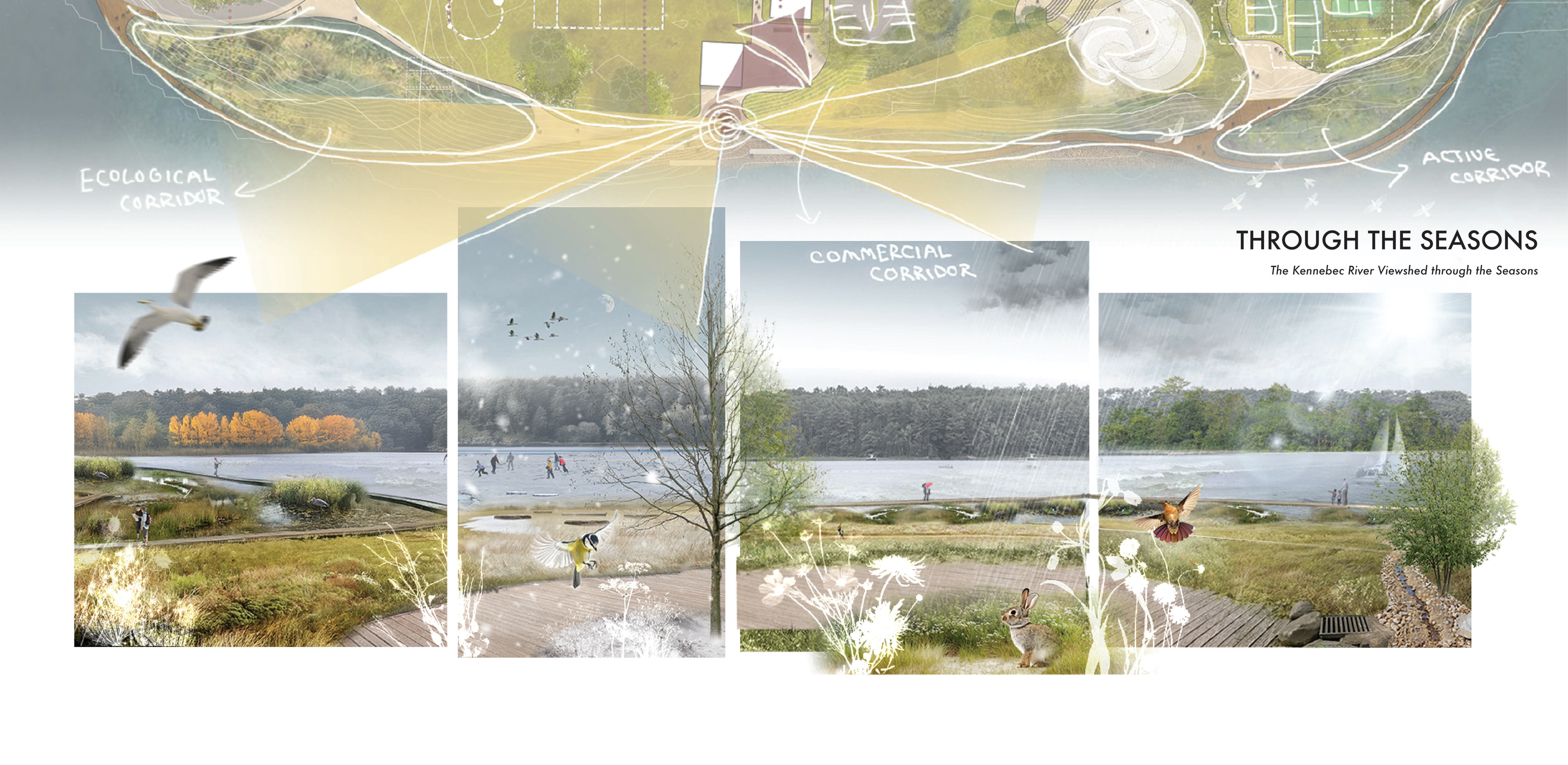
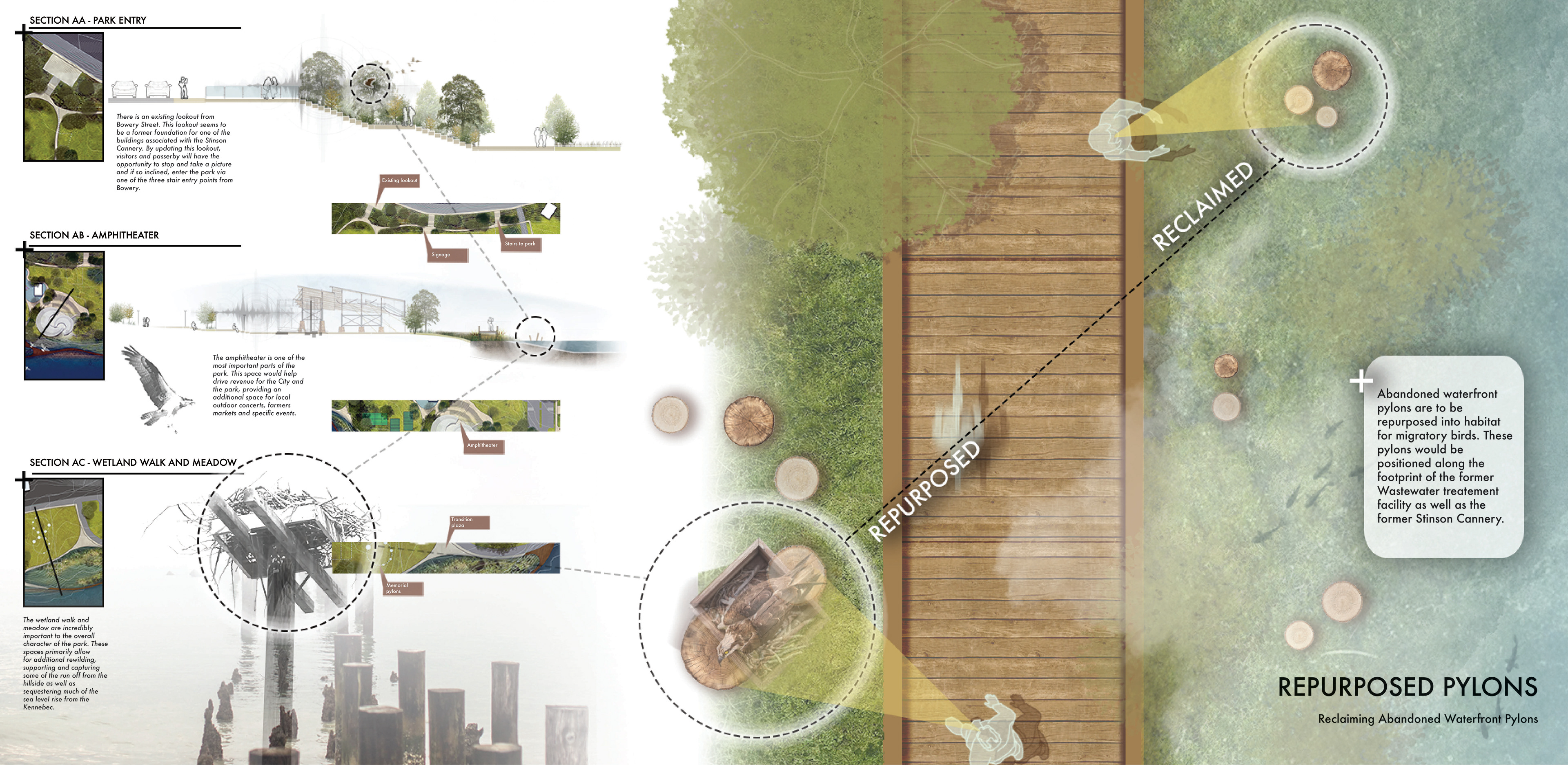
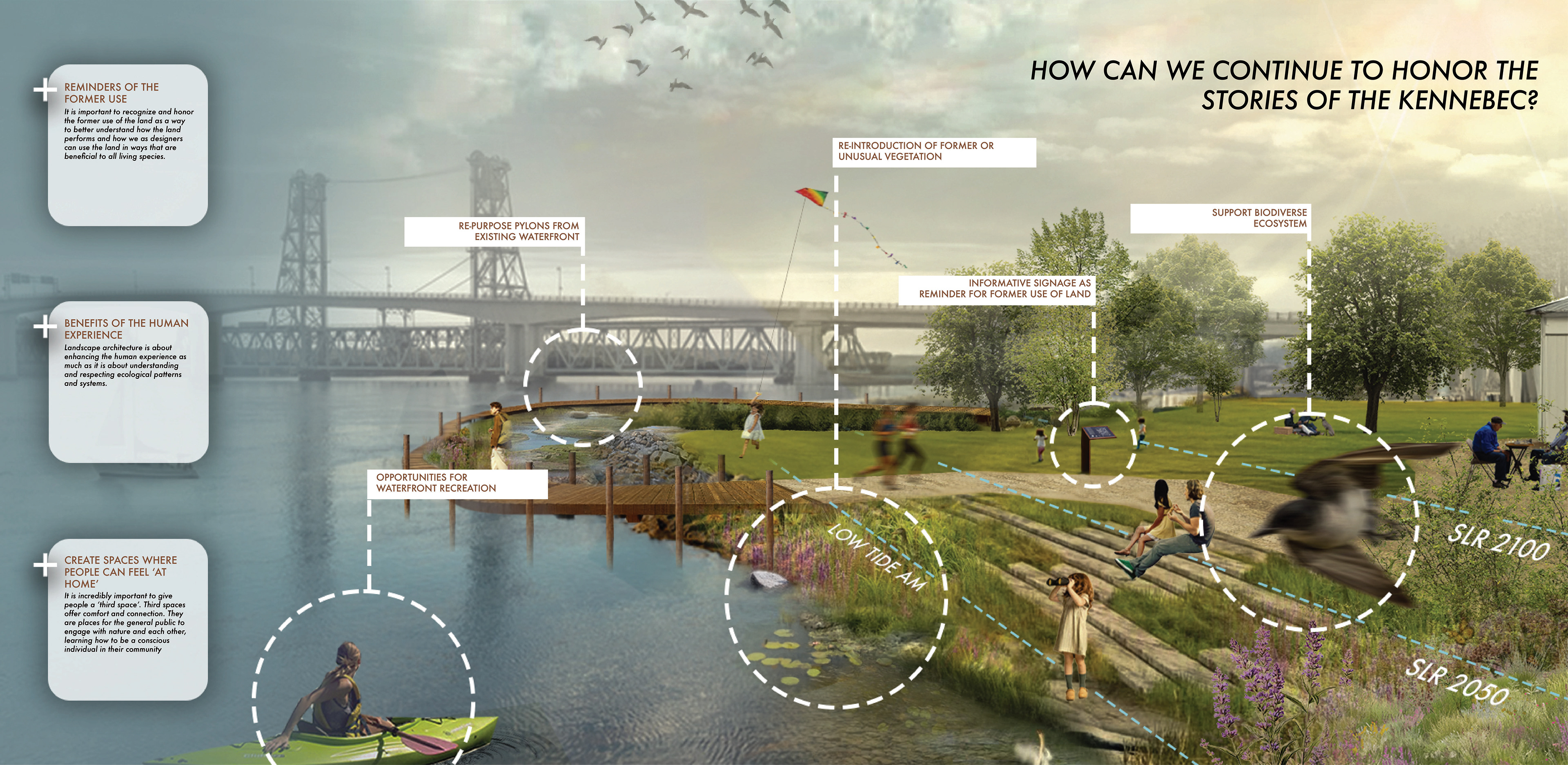
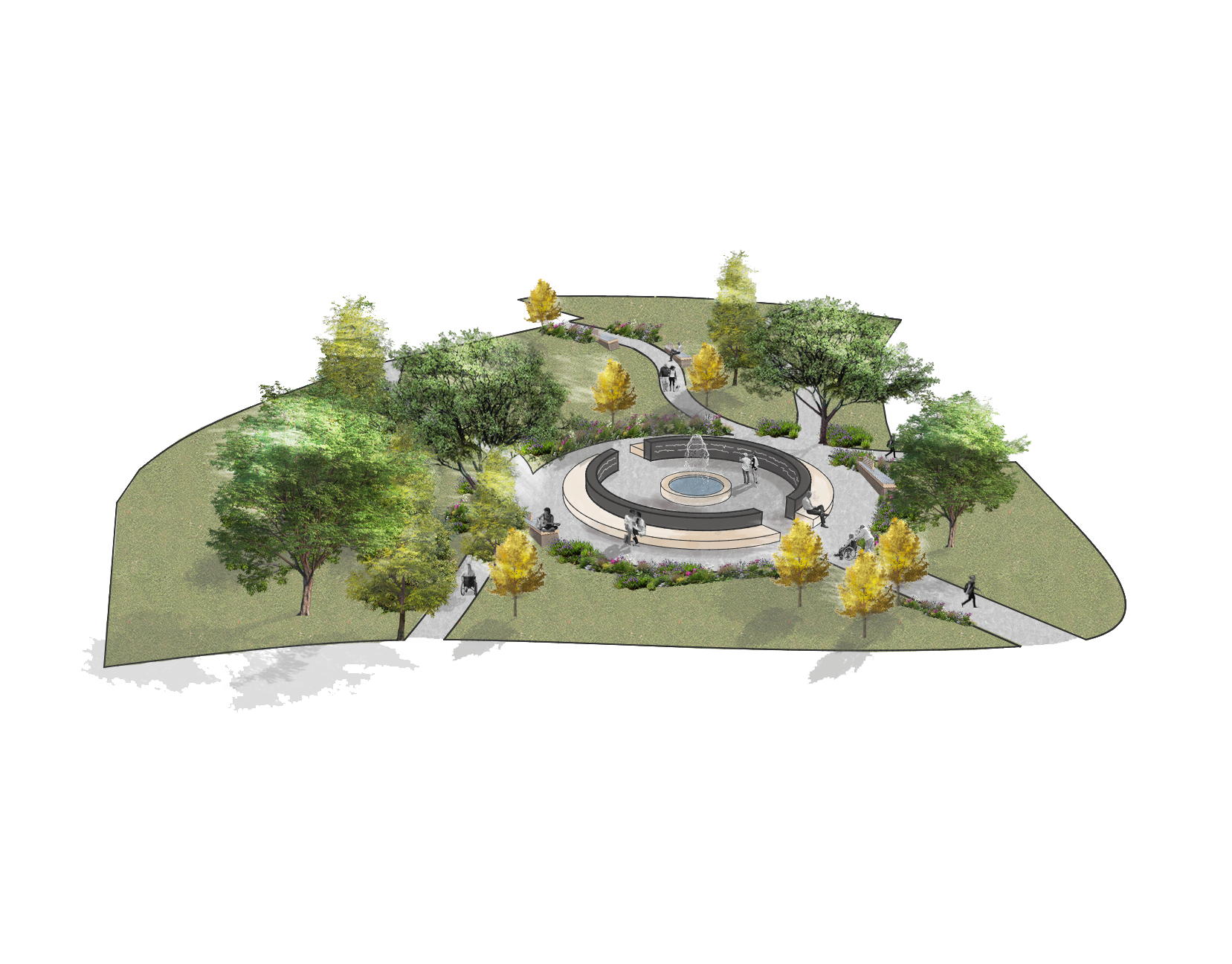
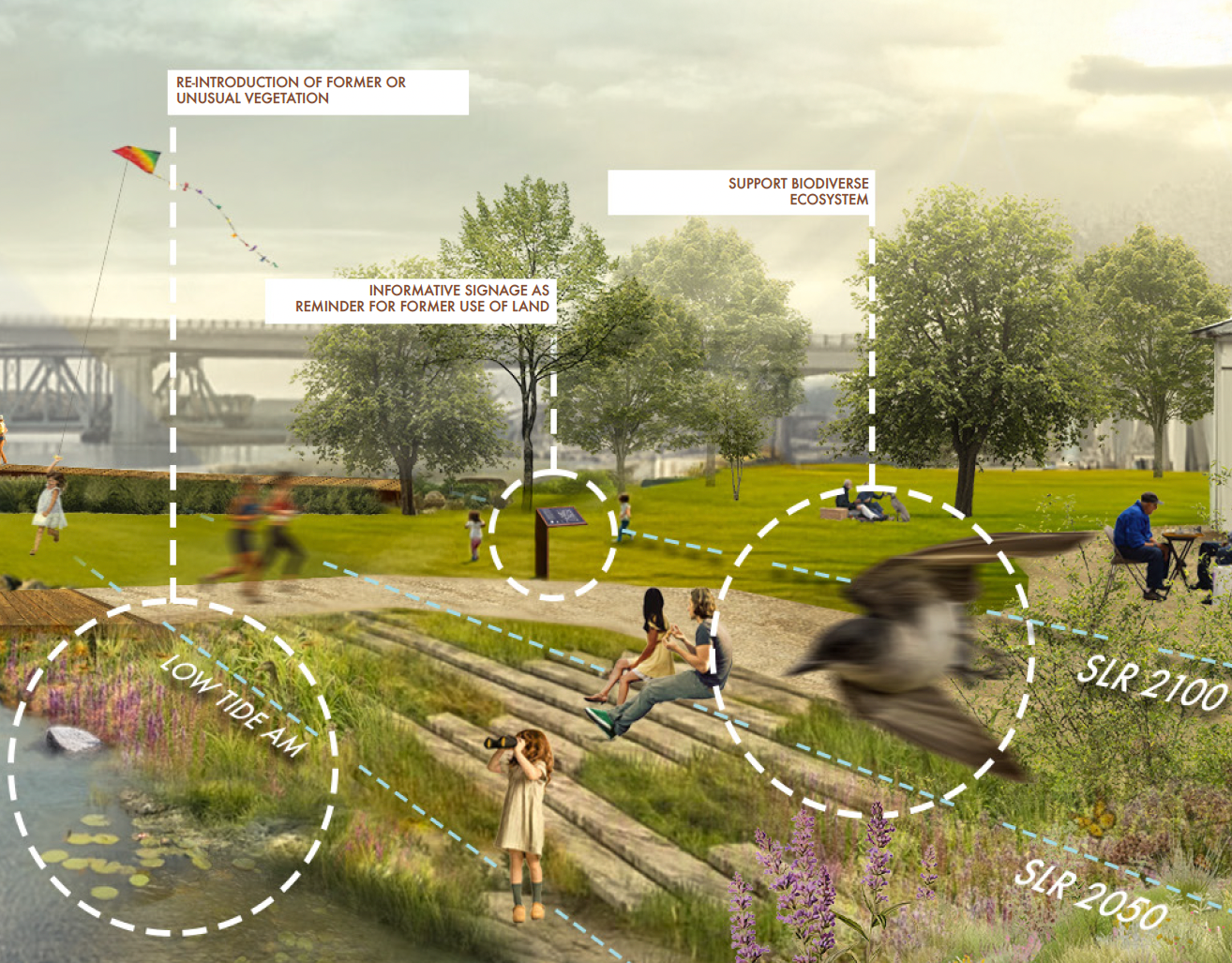
From this, I developed a floodable landscape that puts rewilding and waterfront access at the forefront of this project. This park looks to establish a well disciplined programming schedule, allowing visitors of the park opportunities to engage in active and passive recreation including but not limited to a boardwalk, amphitheater for live music, a playground and scenic vistas with large green spaces for individual use. This park tells a story about plant species and animals returning to the water and to the land through dissecting the land into three distinct microclimates. This parcel is only one small piece of a larger interconnected system, including the already existing Riverwalk. It’s important to recognize and envision this park as a destination for townspeople to visit along this Riverwalk, connecting an existing dissected trail system.